CUEME Red Light Therapy Mask

Both Colorways, Same Cleared Technology
LED Light Therapy Mask (Black)
See on Amazon
LED Light Therapy Mask (Green)
See on AmazonSee more products
Discover the full product lineup with current selection on Amazon.
All products on AmazonSide-by-Side Specifications
Both CUEME LED masks carry identical technology and FDA clearance — the comparison below confirms what's the same and flags the only real difference between the two available options.
| Model | Colorway | Light Modes | NIR Wavelength | Red Light Wavelength | FDA Clearance | Power | Best For |
|---|---|---|---|---|---|---|---|
| CUEME LED Mask (B0F87S6T94) | Black | 8 independently controllable modes (7 colored + NIR) | 850nm | 630nm | Wrinkle reduction & mild-to-moderate acne treatment | Cordless rechargeable controller | Those who prefer a classic, discreet look; also a strong gift option for a wider range of recipients |
| CUEME LED Mask (B0F9FKZ8RS) | Green | 8 independently controllable modes (7 colored + NIR) | 850nm | 630nm | Wrinkle reduction & mild-to-moderate acne treatment | Cordless rechargeable controller | Those who want a distinctive look or are gifting to someone with a preference for color; functionally identical to the Black |
There is no functional reason to choose one colorway over the other — pick Black if you want something that photographs neutrally or ships as a classic gift, and Green if the recipient has a preference for it; the therapy you get from either mask is exactly the same.
What to Look For When Choosing This Mask
The two CUEME LED masks are identical in function — the only difference is the colorway (Black vs. Green). That means your decision within this line comes down to personal preference, not performance. What matters more is understanding whether the mask's specific capabilities match what your skin actually needs right now.
The mask combines 7 colored light wavelengths with 850nm near-infrared light, all operated through independent light control. That independence is the key feature to understand before buying. You're not locked into fixed presets — you can run blue light alone for active breakouts, red light alone for collagen stimulation, or layer red and NIR together for a deeper anti-aging session. Each mode targets a distinct concern:
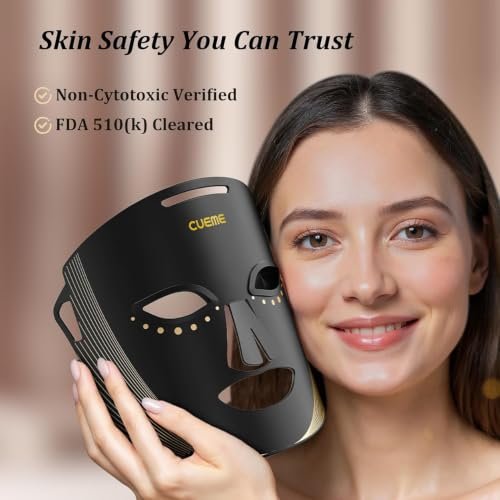
- Red light (630nm): Stimulates collagen production in the dermis — the layer where fine lines and firmness originate. Best for visible wrinkles and overall skin tone.
- Blue light (~415–460nm): Targets the bacteria linked to mild-to-moderate acne (C. acnes) at the sebaceous layer. Addresses active breakouts, not scarring or post-inflammatory marks.
- 850nm near-infrared: Penetrates deeper than visible light, reaching the dermis where collagen and elastin are produced. Works even though you can't see it glowing through the mask.
- Additional colored modes: The remaining wavelengths address concerns like skin tone, inflammation, and circulation — selectable independently based on your session goal.
If your primary concern is active acne, blue light is the mode the FDA clearance specifically covers for that indication. If your focus is anti-aging, red at 630nm and NIR at 850nm are the wavelengths with the strongest published research behind them. If you're managing both, the independent control means you can alternate sessions rather than trying to do everything at once.
How to Build a Session Routine That Actually Works
The protocol behind the FDA-cleared claims is specific: 5–10 minute sessions, 3–5 times per week. That's the cadence — not a suggestion, the actual usage pattern the clearance is built around. Buyers who understand this before purchasing use the mask correctly, see gradual results over 8+ weeks, and don't leave frustrated reviews blaming the device for underdelivering in week two.
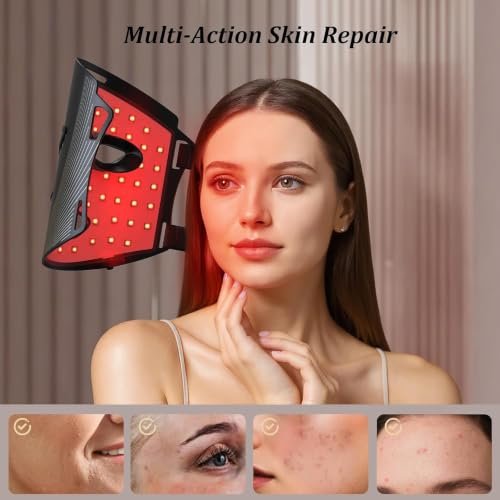
The mask is cordless with a rechargeable controller, which matters for routine-building more than it might seem. You're not tethered to an outlet or limited to sitting at a vanity. A 5–10 minute session fits cleanly into an existing skincare routine — after cleansing and applying any serums, before moisturizer. You can use it on a couch, in bed, or while doing something else. That portability removes the friction that causes people to skip sessions.
A few practical notes for getting the most from each session:
- Start with clean, dry skin — no thick creams or SPF between your face and the LEDs during treatment.
- The contoured eye shields are part of the design for a reason. Use them. LED light at this intensity is safe for skin, but prolonged direct eye exposure isn't something to test.
- Adjustable head straps mean fit is universal, but take 30 seconds to adjust them properly the first time — a mask that shifts during a 10-minute session delivers uneven coverage.
- Results are gradual. Published 8-week review data and the r/SkincareAddiction community consistently confirm that visible improvement in skin firmness and mild acne takes consistent use over multiple weeks, not a handful of sessions.
- The mask works across all facial zones — the LED array covers forehead, cheeks, chin, and the areas around the mouth and eyes. Full-face coverage is built into the positioning of the 70+ LED beads.
Caring for Your Mask and Using It Safely
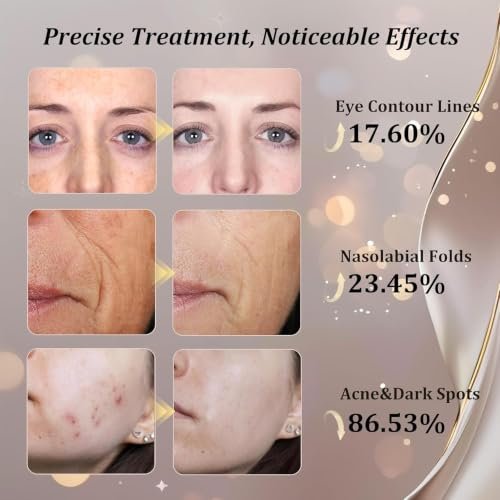
LED masks are low-maintenance by design, but a few consistent habits keep the device performing and extend its useful life. After each session, wipe the inner surface with a soft, slightly damp cloth — no alcohol-based cleaners, which can degrade the silicone construction over time. The rechargeable controller should be stored away from moisture; charging it regularly (rather than running it fully flat each time) is better for battery longevity.
On safety: the FDA clearance means the device has been reviewed for safety at the indicated usage levels. That said, there are two practical limits worth knowing. First, blue light at the intensity used in LED masks is not recommended for use directly over the eyes — the contoured shields are there to prevent that, so keep them in place. Second, if you're currently using photosensitizing medications (certain acne prescriptions, antibiotics, or topicals), check with your dermatologist before starting LED therapy, as some medications increase skin sensitivity to light.
The silicone body is flexible rather than rigid, which makes storage straightforward — it doesn't need a hard case. But storing it flat or hanging it rather than bunching it into a drawer keeps the structure intact and prevents the LED connections from being stressed. The rechargeable controller should be kept at room temperature; extreme heat or cold (a hot car, a cold garage) shortens battery capacity over time.
Frequently Asked Questions
Is "FDA-cleared" the same as "FDA-approved," and does it matter?
They're different designations, and yes, it matters. FDA clearance — the specific status CUEME holds — means the FDA reviewed the device and found it substantially equivalent to a legally marketed predicate device, including for the specific claims being made: wrinkle reduction and mild-to-moderate acne treatment. "FDA-registered" (a term many competing masks use) only means the manufacturer registered their facility with the FDA — it says nothing about whether the device itself was reviewed for safety or efficacy. When you see "FDA-cleared" on the CUEME mask, that's the meaningful designation.
How long before I see results from the LED mask?
The honest answer: 8 or more weeks of consistent use at 3–5 sessions per week. That's not a caveat — it's what the protocol is built around, and it matches what published 8-week review data and experienced users on r/SkincareAddiction consistently confirm. Skin cell turnover and collagen stimulation are biological processes that work on their own schedule. What you can expect earlier (around weeks 3–4) is improvement in skin texture and a reduction in active breakouts if you're using the blue light mode. Visible firmness and wrinkle reduction take longer. Buyers who know this going in are the ones who stick with the protocol long enough to see it work.
Can I use the mask if I'm on acne medication or prescription topicals?
Some medications — including certain oral antibiotics, retinoids, and prescription acne treatments — increase photosensitivity, meaning your skin's reaction to light is amplified. Before starting LED therapy alongside any prescription skincare regimen, check with your dermatologist. This isn't a reason to avoid the mask; it's a reason to have a 5-minute conversation with your provider first. The FDA-cleared usage protocol assumes otherwise healthy skin without photosensitizing agents in the mix.
Does the mask cover the full face, including around the eyes and mouth?
Yes. The LED array includes 70+ LED beads positioned to reach the forehead, cheeks, chin, and the areas around the mouth and eyes. The silicone construction is flexible rather than rigid, which means it conforms to facial curves rather than sitting flat and leaving gaps at the jaw or temples. The contoured eye shields are included specifically to protect your eyes during treatment — they block direct light exposure while allowing the LEDs positioned around the orbital area to do their work on the surrounding skin.
What is near-infrared light doing that I can't see?
Near-infrared at 850nm sits just beyond the visible spectrum — you won't see it glowing through the mask the way you see the red or blue light. What it's doing is penetrating deeper into skin tissue than visible wavelengths, reaching the dermis where collagen and elastin production happens. Think of it as the deeper complement to red light at 630nm: red works at the dermis level for collagen stimulation and inflammation reduction, while NIR pushes further to support cellular repair at a layer visible light doesn't consistently reach. Because the CUEME mask controls NIR independently, you can run it alone, combine it with red, or leave it out of a blue-light-focused acne session entirely.
Is this mask a good gift for someone who isn't a skincare expert?
It's one of the stronger options in the category for gifting precisely because the FDA clearance does the credibility work for you. When the box says FDA-cleared for wrinkle reduction and acne treatment, a recipient who doesn't follow skincare closely still understands that this is a real device, not a novelty. The adjustable head straps and contoured eye shields signal thoughtful design rather than a cheap gadget. The cordless rechargeable setup means there's no outlet-hunting or cord management to figure out. The practical guidance to pass along: 5–10 minutes, 3–5 times a week, give it 8 weeks — that's the whole protocol.